
Fintech Website Development 2026: Engineering High-Trust Financial Platforms
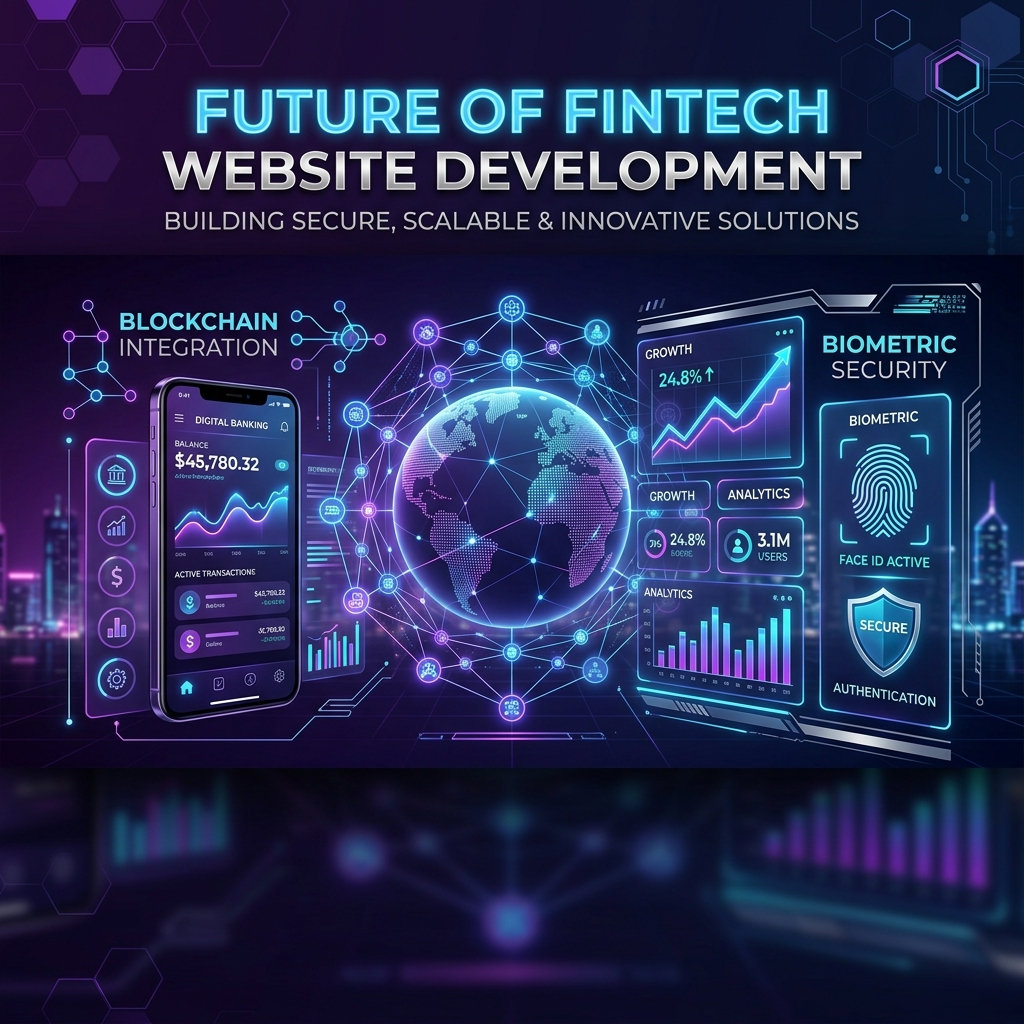
Direct Answer: Fintech website development is the engineering of high-performance, conversion-optimized financial web platforms and client portals that blend bank-grade cybersecurity, strict regulatory compliance, trust-inspiring UI/UX design, and instant API integrations to process wealth, banking, and payment workflows seamlessly.
⚡ Key Takeaways
- Financial websites and portals require exceptional UI/UX clarity, transparent security signals, and sub-second performance to convert skeptical visitors into active depositors.
- Core technical architectures demand zero-trust microfrontends, end-to-end encryption, strict Content Security Policies (CSP), and automated compliance monitoring.
- The United States, United Kingdom, Singapore, India, and Germany represent the world’s most dynamic global FinTech engineering and capital investment hubs.
- Web performance directly influences user trust: a 1-second delay in financial transaction confirmations degrades perceived platform reliability by over 38%.
- Modern FinTech web engineering incorporates interactive wealth simulators, seamless Plaid/Stripe onboarding, and frictionless biometric web authentication (WebAuthn).
1. Security: The Foundation of Every Fintech Web App
Security in fintech website development is not a superficial feature but the structural foundation, requiring strict Content Security Policies (CSP), biometric WebAuthn logins, end-to-end tokenization, and real-time defense against Cross-Site Scripting (XSS) and Man-in-the-Middle (MitM) exploits.
When users entrust a web application with their liquid capital, savings accounts, or investment portfolios, their psychological tolerance for software errors is zero. Financial platforms must eliminate vulnerabilities before a single line of frontend code reaches production browsers.
Modern FinTech web engineering employs defense-in-depth: Subresource Integrity (SRI) on third-party scripts, strict HTTP Strict Transport Security (HSTS) with preloading, SameSite cookie protection against CSRF, and end-to-end API communication over TLS 1.3 encrypted sockets.
Client-Side Protection Tip
Financial web portals should implement strict Content Security Policies (CSP) prohibiting inline script execution (unsafe-inline) and restricting script loading exclusively to cryptographically hashed or nonced origins. This completely thwarts third-party form-jacking and data scraping attacks.
2. Top Fintech Development Trends in 2026
Key 2026 fintech website development trends center on conversational AI advisors, biometric WebAuthn passkeys replacing passwords, embedded finance widgets, Open Banking financial aggregator portals, and real-time interactive financial modeling tools.
Leading financial portals are moving away from passive brochureware toward deeply interactive financial command centers:
- WebAuthn & Passkey Authentication: Enabling customers to authenticate seamlessly via FaceID, TouchID, or hardware YubiKeys directly in the browser, eliminating phishing vectors associated with SMS one-time passwords.
- Interactive Real-Time Simulators: Engaging mortgage calculators, retirement trajectory planners, and tax estimation widgets that update dynamically using client-side WebAssembly routines.
- Unified Open Banking Aggregators: Empowering customers to link external bank accounts, crypto holdings, and loan balances into a unified real-time dashboard via Plaid, MX, and Tink APIs.
- Agentic Financial Copilots: On-device generative AI assistants that summarize monthly spending trends, recommend automated debt payoff schedules, and resolve support requests without wait times.
3. Top 10 Countries Leading the Fintech Revolution
The global FinTech revolution is concentrated across specialized international technology corridors with progressive regulatory sandboxes, deep institutional capital, and top-tier software engineering ecosystems.
The table below highlights the world's leading countries driving innovation in financial technology, software development, and digital banking platforms in 2026:
| Rank & Country | Key Innovation Strengths | Regulatory Environment | Primary FinTech Verticals |
|---|---|---|---|
| 1. United States | Venture capital scale, enterprise SaaS, AI integration | State & Federal dual regulation (SEC, CFPB) | Payments, Neo-brokerage, Embedded Finance |
| 2. United Kingdom | Open Banking pioneership, London financial capital | FCA Regulatory Sandbox, progressive open APIs | Neobanks (Revolut, Monzo), RegTech, FX |
| 3. Singapore | Southeast Asian gateway, institutional wealthtech | MAS (Monetary Authority of Singapore) clarity | Digital Assets, Cross-Border Payments, WealthTech |
| 4. India | UPI infrastructure, unmatched developer scale, low CAC | RBI digital innovation frameworks, NPCI | Instant Real-Time Payments, Micro-Lending, InsurTech |
| 5. Germany | Strict EU GDPR privacy leadership, BaFin compliance | European Central Bank & BaFin strict governance | B2B FinTech, Green Finance, Core Banking SaaS |
| 6. Switzerland | Crypto Valley Zug, private wealth management, security | FINMA progressive fintech license framework | Asset Tokenization, Private Banking Tech, Blockchain |
| 7. Australia | Consumer Data Right (CDR), alternative payment rails | ASIC digital sandbox, open banking mandates | Buy Now Pay Later (BNPL), Cloud Superannuation |
| 8. Canada | Toronto-Waterloo AI corridor, stable banking network | OSFI & Bank of Canada progressive supervision | MortgageTech, Wealth Management, Payroll Automation |
| 9. Sweden | Cashless economy pioneer, Nordic payment unicorns | Swedish FSA, Nordic open banking cooperation | Payment Gateways (Klarna), Open Banking (Tink) |
| 10. UAE | DIFC & ADGM sandboxes, MENA financial capital | Dual common-law digital asset and fintech regulations | Sovereign Digital Currency, Islamic FinTech, Remittances |
4. Designing for Financial Trust (UI/UX Engineering)
Designing for financial trust requires transparent data visualizations, immediate confirmation states for every balance change, accessible typography, prominent compliance badges, and clean visual hierarchies that minimize cognitive strain during high-stakes financial operations.
In financial interfaces, aesthetic design is an integral driver of trust. Ambiguous button states, delayed feedback spinners, or hidden fee disclosures trigger instant user skepticism. Successful fintech UI/UX adheres to these principles:
- Affirmative Feedback Cycles: Every monetary transaction must display explicit, multi-stage confirmation steps followed by immediate visual success receipts and downloadable PDF vouchers.
- Information Architecture Clarity: Critical financial metrics—such as net balance, available credit, and accrued interest—must occupy focal visual hierarchy positions using clear, legible numeric fonts (e.g., tabular figures).
- Proactive Disclosures: Transparency around fee structures, exchange rates, and processing timelines prevents cart abandonment and customer disputes.
5. Scaling Financial Infrastructure for the Future
Scaling financial web platforms requires resilient cloud infrastructure engineered with distributed database clustering, automated blue-green zero-downtime deployments, multi-region failover, and comprehensive real-time Application Performance Monitoring (APM).
Whether handling Black Friday payment spikes or market opening volatility, financial web platforms cannot suffer outage windows. Partnering with a proven technology team like Scenic IT Solutions ensures your fintech web application is built to enterprise architectural standards that scale effortlessly.
Frequently Asked Questions
What makes fintech website development different from standard web development?
Fintech web development requires zero-tolerance cybersecurity, strict regulatory compliance (PCI-DSS, SOC 2), bank-grade encryption, real-time data streaming, double-entry financial accounting, and trust-centered UI/UX designed to manage sensitive financial transactions.
How does WebAuthn improve fintech website security?
WebAuthn enables passwordless biometric authentication (such as Apple FaceID, Windows Hello, or hardware security keys) directly within the web browser. Because authentication occurs cryptographically on the user’s local device, it completely eliminates credential stuffing and SMS phishing attacks.
Which frontend technologies are best suited for fintech web applications?
Next.js (React) and Nuxt (Vue) are the premier frontend frameworks for fintech in 2026. They combine server-side rendering for lightning-fast initial load times with reactive single-page client states for real-time charting, instant balance updates, and seamless financial wizards.
How do you test a fintech website before launching to live banking rails?
We conduct multi-tier testing encompassing automated unit testing, end-to-end user journey simulation with Playwright, mock sandbox testing across payment processors (Stripe, Plaid), third-party penetration testing, and load stress testing under peak transaction concurrency.
Can Scenic IT Solutions integrate custom fintech websites with core banking APIs?
Yes. Our senior development engineers have extensive experience connecting web platforms with core banking systems, BaaS providers, payment gateways, and Open Banking financial data aggregators using secure REST, GraphQL, and webhook architectures.
📚 Related Articles & Recommended Reading



Accelerate Your Digital Roadmap with Scenic IT Solutions
Looking for an experienced web development partner to build high-performance custom applications or scale your engineering team? Let's discuss your project goals.
Schedule a Free Consultation