
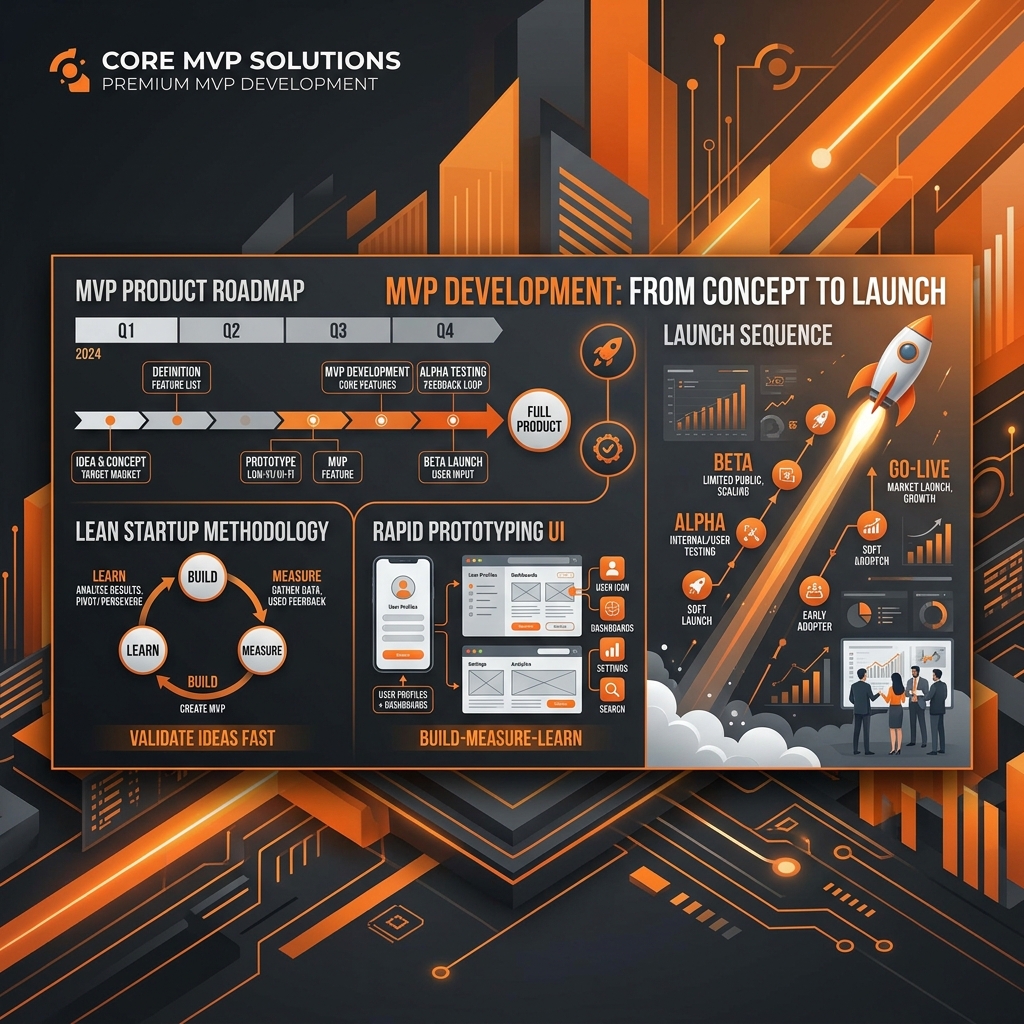
The number one reason startups fail is building a product that nobody wants. In 2026, the Minimum Viable Product (MVP) methodology is more critical than ever. Investors demand traction before writing checks, and users expect polished core functionality on day one.
An MVP is not a broken or half-finished product; it is the smallest version of your product that delivers the core value proposition. At Scenic IT Solutions, we specialize in helping founders transition from idea to launch rapidly, ensuring they validate their market hypothesis without burning their entire budget.
Before writing a single line of code, you must ruthlessly prioritize your features.
The development lifecycle for an MVP is fundamentally different from enterprise software. It relies heavily on rapid prototyping and agile delivery.
First, we start with UI/UX Wireframing. A clickable Figma prototype can often secure pre-seed funding before any coding begins. Next, we build the Core Engine—focusing solely on backend logic and database architecture. Finally, we apply a clean, minimalist frontend design that looks professional without requiring weeks of custom CSS animations.
We have guided hundreds of startups through the launch process. Here are the traps to avoid.
| Mistake | The Result | The Fix |
|---|---|---|
| Feature Creep | Delayed launch and bloated budget. | Strict adherence to the core feature list. "Nice-to-haves" go to Phase 2. |
| Ignoring Design | Users assume the product is untrustworthy. | An MVP must be limited in scope, but polished in presentation. |
| Over-engineering | Wasting time building architecture for a million users. | Build for 10,000 users. If you hit 10k, you'll have the funding to rebuild. |
Speed is everything. We frequently utilize frameworks like React Native for mobile, allowing us to launch iOS and Android apps simultaneously. For web platforms, Laravel and Node.js provide massive ecosystems of pre-built packages (like authentication and billing), drastically cutting down development time.
An MVP is the starting line, not the finish line. By launching a lean, focused product, you gather the real-world user data necessary to convince investors and guide your product roadmap.
A standard MVP takes between 8 to 12 weeks to develop, depending on the complexity of the core feature set.
No-code is great for internal validation, but for raising capital and handling real users, custom code ensures you own the IP and can scale the product later.
Don't spend months building something without market validation. At Scenic IT Solutions, our rapid MVP development process gets your product into the hands of real users quickly and efficiently.
Stop waiting. Hire our MVP developers or book a free idea consultation today.