
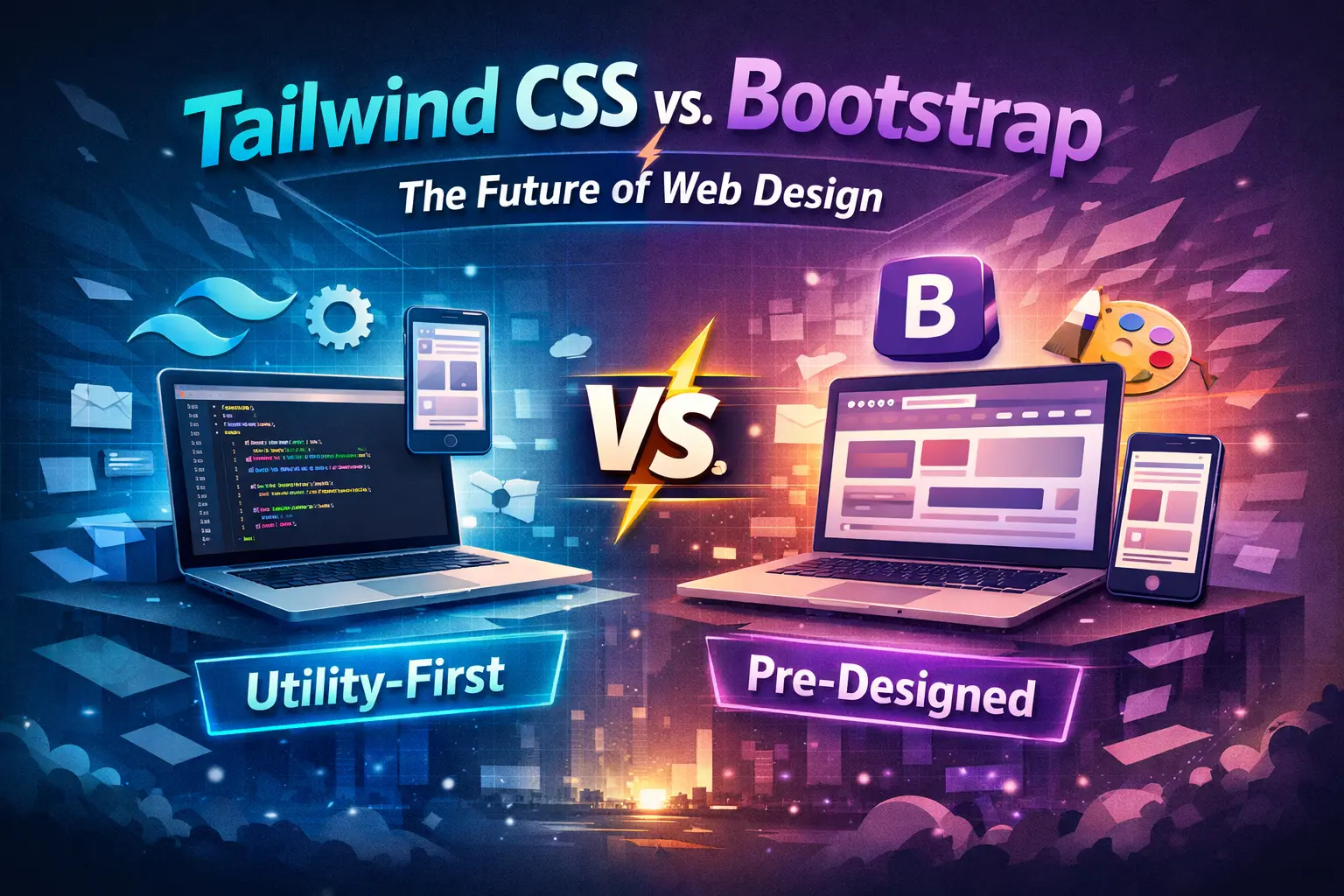
In the world of web design, tools change fast. For years, Bootstrap was the undisputed king of responsive design. But in 2026, a challenger has taken the throne for many developers: Tailwind CSS.
The debate between "Utility-First" (Tailwind) and "Component-Based" (Bootstrap) frameworks is hotter than ever. Should you stick with the time-tested reliability of Bootstrap, or embrace the modern, custom-tailored freedom of Tailwind? Let's break it down.
| Feature | Bootstrap | Tailwind CSS |
|---|---|---|
| Philosophy | Component-Based (Pre-built blocks) | Utility-First (Build it yourself) |
| Customization | Harder (Requires overriding defaults) | Limitless (Design from scratch) |
| File Size | Larger (Includes unused styles) | Tiny (Purges unused CSS) |
| Best For | MVPs, Internal Tools, Beginners | Custom Designs, Scalable Apps |
| Learning Curve | Low | Medium (Requires CSS knowledge) |
Choose Bootstrap if:
Choose Tailwind CSS if:
Planning a complex web app? See why we often pair Tailwind with strong backends in our Node.js vs PHP Comparison.
At Scenic IT Solutions, we specialize in high-end, custom designs. While we love Bootstrap for quick prototypes, our production-grade applications are increasingly built with Tailwind for that premium, bespoke feel.
👉 Want a website that stands out from the crowd? Hire our UI/UX Design Team.
Ready to start? Contact us today for a free quote.