
How a Custom Web App Saves Money and Grows Your Business in 2026

Many business owners view software development as a major business expense. However, forward-thinking organizations recognize that custom web applications are actually one of the highest-yielding capital investments a company can make.
Direct Answer: A custom web application saves money and accelerates business growth by replacing manual spreadsheet data entry with automated business logic, eliminating recurring per-seat SaaS licensing fees, preventing expensive operational errors, and providing 24/7 self-service client portals that scale revenue without increasing payroll.
At Scenic IT Solutions, we build custom web applications that transform sluggish, paper-heavy businesses into modern, automated digital leaders. Here is how custom software directly enhances your bottom-line profitability.
⚡ Key Takeaways
- A custom web application automates manual, repetitive administrative workflows, saving businesses hundreds of staff hours every month.
- Eliminates the "SaaS subscription tax" by replacing multiple third-party monthly per-seat licenses with a single owned software asset.
- Self-service customer portals allow clients to place orders, download invoices, and track services 24/7 with zero human intervention.
- Dramatically reduces costly human data entry mistakes in billing, inventory calculation, and order dispatching.
- Custom web software provides scalable operational leverage, allowing companies to double revenue without doubling administrative headcount.
1. What Is a Custom Business Web Application?
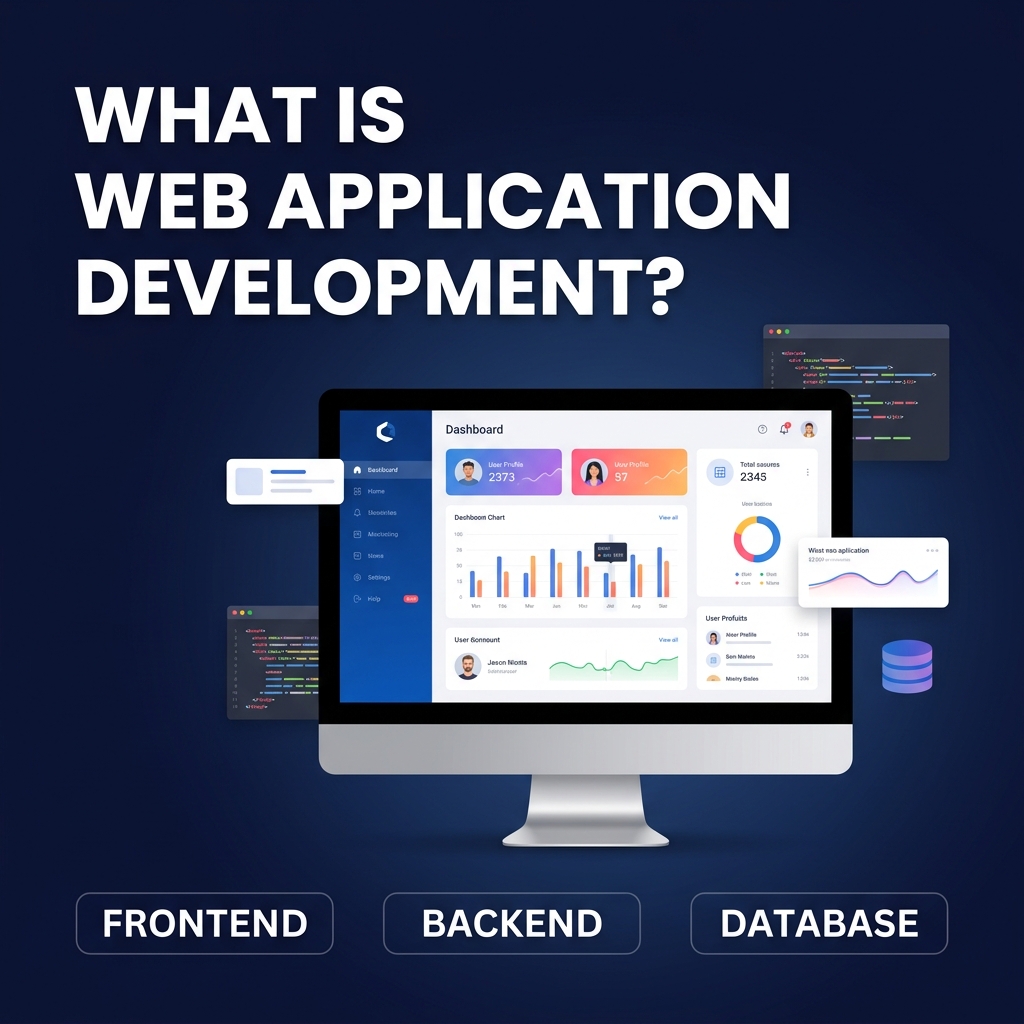
The Direct Answer: Unlike static informational websites that merely display text, a custom web application is dynamic interactive software accessible via any browser, engineered to perform complex computational workflows, process data, and automate operations.
Examples include internal inventory management dashboards, client onboarding portals, automated quoting and billing calculators, custom scheduling engines, and multi-tenant SaaS platforms.
2. Cutting Operational Costs Through Automated Business Workflows
The Direct Answer: Automating repetitive tasks—such as generating invoices, routing approval requests, updating inventory levels, and dispatching client notifications—saves companies 15 to 25 hours per employee every single week.
If you have five administrative staff members earning $25/hour spending half their workday manually copying data between email, spreadsheets, and accounting software, you are burning over $65,000 every year on pure digital busywork.
A custom web app automates data flows instantly through backend APIs, freeing your team to focus on revenue-generating sales and client relationship activities.
3. Eliminating SaaS Subscription Fatigue and Per-Seat License Fees
The Direct Answer: As companies grow, monthly subscriptions for CRM, project management, invoicing, and scheduling tools rapidly compound into thousands of dollars in recurring software fees that vanish when you cancel.
By developing a proprietary web application, your business converts ongoing subscription liabilities into an owned balance-sheet asset. You can add 50, 100, or 1,000 new team members or clients without paying an additional penny in per-seat software licensing fees.
Explore this trade-off in detail in our analysis of custom CRM vs. off-the-shelf software.
4. Boosting Employee Productivity and Reducing Costly Human Errors
The Direct Answer: Manual data entry inevitably leads to missed invoices, incorrect inventory counts, and lost customer orders. A custom web app enforces strict database validation rules that eliminate human error.
By implementing single-click data generation, automated calculations, and unified customer profiles, employees execute tasks in minutes that previously required hours of tedious manual cross-referencing.
5. Cost Savings and ROI: Manual Workflows vs. Custom Web Apps (Table)
The Direct Answer: This ROI matrix illustrates how custom software automation directly reduces overhead and accelerates revenue output across core business functions.
| Operational Area | Manual / Fragmented Workflow | Custom Web Application Automation |
|---|---|---|
| Client Onboarding | Manual PDF email exchanges, 3–5 days turnaround. | Automated self-service digital onboarding in 10 minutes. |
| Order & Quote Generation | Manual spreadsheet calculations; frequent pricing errors. | Instant algorithmic quote generator with automated e-signatures. |
| Software Licensing | $1,500 – $4,000+ / mo across multiple SaaS tools. | $50 – $150 / mo in dedicated cloud server hosting. |
| Operational Scale | Requires hiring more staff for every 20% growth. | 10x transaction volume with zero additional administrative headcount. |
6. Unlocking Scalable Revenue Growth with Self-Service Customer Portals
The Direct Answer: Modern customers expect 24/7 digital convenience. A self-service web application allows clients to submit requests, track orders, make payments, and view reports at their convenience without waiting for business hours.
This round-the-clock availability increases client retention, accelerates payment collection cycles, and gives your business a significant competitive advantage over competitors who still rely on phone calls and paper forms.
7. Conclusion: Investing in Software as a High-Yield Capital Asset
The Direct Answer: Building a custom web application is not an overhead expense; it is a transformative investment that reduces costs, expands operating margins, and builds long-term enterprise valuation.
At Scenic IT Solutions, our engineering team builds custom web applications that solve complex business bottlenecks and drive real commercial ROI. Discover what is possible by reviewing our custom web app development cost guide or consulting our solutions team.
Frequently Asked Questions
How quickly does a custom business web application pay for itself?
Most custom business web applications achieve full ROI break-even within 8 to 14 months through eliminated SaaS license fees, labor hour savings, and increased order processing capacity.
Can a custom web app connect to our existing accounting software like QuickBooks or Xero?
Yes, custom web applications integrate seamlessly via REST APIs with QuickBooks, Xero, Stripe, and modern ERPs to synchronize financial transactions automatically.
Do employees need technical training to use a custom web app?
No. Because custom web applications are built specifically around your existing company terminology and processes, employees typically master the interface in an hour with minimal training.
Is a web application accessible on mobile phones and tablets?
Yes, all web applications built by Scenic IT Solutions are fully responsive Progressive Web Applications (PWAs), ensuring seamless operation across desktop monitors, iPads, and smartphones.
How do we know if our business is ready for custom software?
If your team spends more than 10 hours a week on repetitive spreadsheet data entry, pays over $1,000/month in third-party software subscriptions, or struggles with communication silos between departments, you are ready for a custom web application.
📚 Related Articles & Recommended Reading

Automate Your Business & Cut Operational Overhead
Ready to replace tedious manual processes with a high-ROI custom web application? Partner with Scenic IT Solutions to build your proprietary software solution.
Request a Free ROI Assessment