
What Makes ChatGPT So Powerful? Technical Architecture Deep Dive (2026)
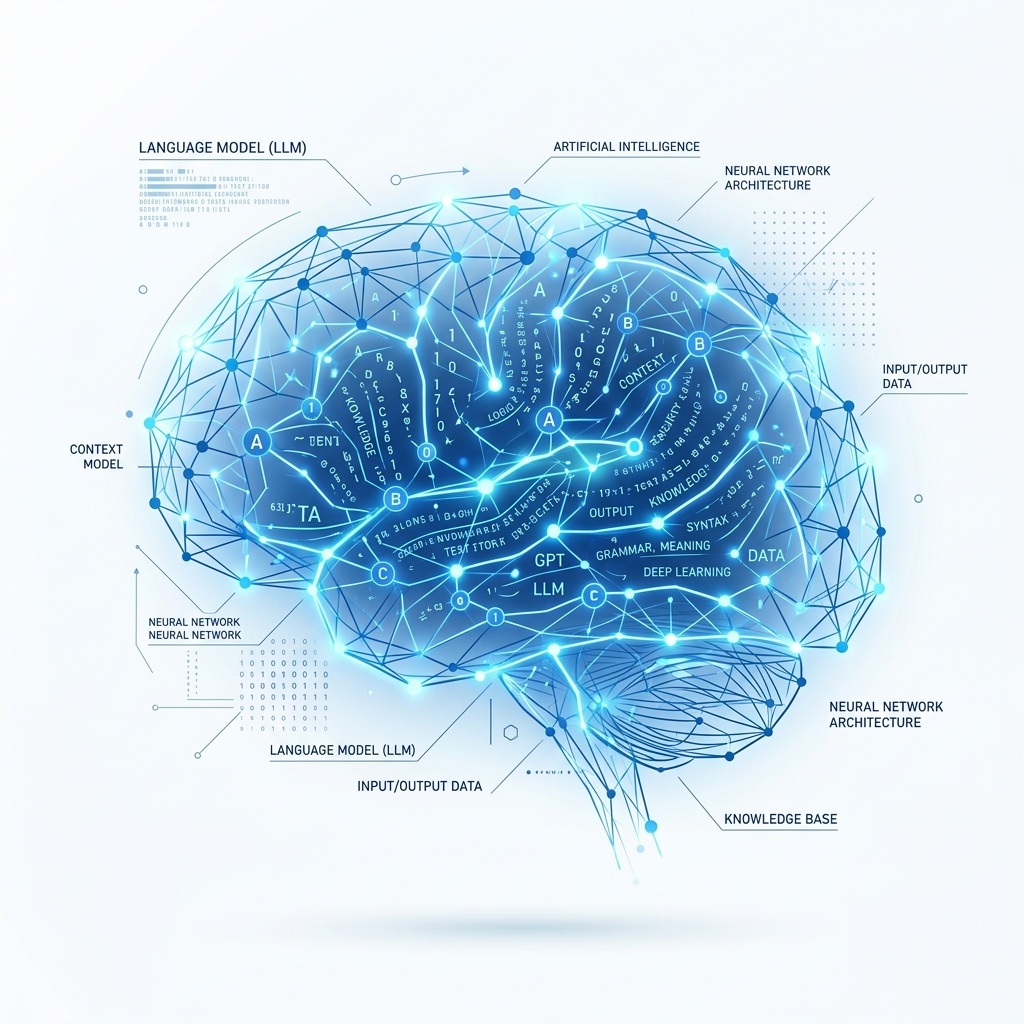
Direct Answer: ChatGPT’s extraordinary power is the result of four synergistic technical pillars: the Transformer neural network architecture utilizing self-attention, unsupervised pre-training across multi-trillion token datasets, Reinforcement Learning from Human Feedback (RLHF) alignment, and autonomous multi-modal tool-calling capabilities.
⚡ Key Takeaways
- ChatGPT’s groundbreaking capability stems from the Transformer neural network architecture, featuring multi-head self-attention mechanisms.
- Massive unsupervised pre-training across trillions of diverse tokens allows the model to develop rich internal representations of human language, logic, and code.
- Reinforcement Learning from Human Feedback (RLHF) aligns the raw base model with human intent, safety guidelines, and conversational nuance.
- Modern ChatGPT versions integrate multi-modal perception (text, vision, audio) alongside autonomous external tool calling and code execution.
- Businesses leverage ChatGPT and OpenAI APIs to automate customer support, extract unstructured document data, and build intelligent enterprise copilots.
1. The Transformer Architecture & Self-Attention Mechanism
At the core of ChatGPT lies the Transformer architecture, which replaces sequential recurrent networks with self-attention mechanisms that process entire text sequences simultaneously, capturing long-range contextual relationships between words regardless of their positional distance.
Prior to the invention of the Transformer (introduced by Google researchers in the seminal 2017 paper "Attention Is All You Need"), natural language processing relied on Recurrent Neural Networks (RNNs) and Long Short-Term Memory (LSTM) networks. These legacy architectures processed words one by one in sequential order, making them computationally slow and prone to forgetting the beginning of a sentence by the time they reached the end.
Transformers calculate mathematical "attention weights" between every word token in a prompt. When reading the word "bank" in a sentence, the self-attention mechanism analyzes surrounding words like "river" or "deposit" to determine with mathematical precision which semantic meaning applies.
Technical Architecture Note
Multi-head self-attention splits token embeddings across multiple parallel projection subspaces. This allows the neural network to simultaneously focus on grammatical structure, factual references, and conversational tone within a single forward pass.
2. Unsupervised Pre-Training Across Trillions of Tokens
ChatGPT develops its broad world knowledge through unsupervised self-supervised pre-training on multi-terabyte datasets spanning books, academic papers, open web pages, and millions of software code repositories.
During the pre-training phase, the model is tasked with a deceptively simple objective: predict the next word token in a sequence given all preceding tokens. By executing this next-token prediction task trillions of times across vast supercomputing GPU clusters, the model inherently learns:
- Syntax & Grammar: Flawless command of human language structure across dozens of international languages.
- Factual Reasoning: Complex relationships across history, physics, mathematics, philosophy, and law.
- Coding Proficiency: Syntactical rules, algorithmic patterns, and debugging workflows across Python, JavaScript, C++, SQL, and modern frameworks.
3. Reinforcement Learning from Human Feedback (RLHF)
Reinforcement Learning from Human Feedback (RLHF) is the critical alignment process that transforms a raw, unpredictable text-completion base model into a helpful, polite, and instruction-following conversational assistant.
A raw pre-trained model simply predicts what word is statistically likely to follow. If asked "How do I reset my password?", it might simply generate another related question rather than providing a helpful answer. RLHF solves this through a three-stage refinement pipeline:
| Alignment Stage | Methodology | Outcome for the Model |
|---|---|---|
| 1. Supervised Fine-Tuning (SFT) | Human annotators provide high-quality prompt-and-response demonstrations | Teaches the model the conversational question-and-answer format |
| 2. Reward Model Training | Humans rank multiple model outputs from best to worst | Creates a scoring function that mathematically scores helpfulness and safety |
| 3. Proximal Policy Optimization (PPO) | Reinforcement learning updates model weights to maximize reward scores | Aligns model behavior to consistently generate safe, accurate, helpful responses |
4. Multi-Modal Intelligence and Autonomous Tool Calling
Modern ChatGPT has expanded beyond pure text processing into a multi-modal agent capable of interpreting images, parsing audio, executing sandboxed Python code, searching the live internet, and invoking external enterprise REST APIs via function calling.
When given a complex data analysis task, ChatGPT does not simply guess answers based on probabilistic text tokens. It writes and runs custom Python scripts in a secure sandbox, generates interactive charts, and inspects visual output before returning verified results to the user.
Function calling allows ChatGPT to act as an intelligent orchestrator for enterprise software, fetching real-time database records, creating CRM leads, and triggering automated business workflows.
5. Enterprise Business Applications and the Future of AI
Businesses leverage ChatGPT and OpenAI APIs to power 24/7 intelligent customer support agents, automate financial document extraction, accelerate software development, and synthesize complex business intelligence reports.
At Scenic IT Solutions, we help companies harness the transformative power of ChatGPT and large language models by engineering custom AI integrations, private agentic workflows, and secure web application interfaces that protect corporate data while maximizing employee productivity.
Frequently Asked Questions
Does ChatGPT actually "understand" what it is saying?
ChatGPT does not possess human-like conscious understanding or subjective experience. It is a highly sophisticated mathematical model that calculates probability distributions over tokens based on patterns learned from trillions of training examples, producing responses that mimic deep semantic understanding.
Why does ChatGPT sometimes hallucinate false information?
Hallucinations occur because large language models are optimized for statistical plausibility rather than absolute factual truth. When the model encounters ambiguous prompts or gaps in its training data, it may generate convincing-sounding statements that have no basis in reality.
What is the difference between GPT-3.5, GPT-4, and modern reasoning models?
GPT-3.5 was a foundational conversational model; GPT-4 introduced multi-modal capabilities (vision, audio) and vastly superior factual reasoning. Newer reasoning models (such as OpenAI o1/o3) utilize "chain-of-thought" deliberation to systematically think through complex logic, math, and coding problems before answering.
Is it safe for businesses to send proprietary data to ChatGPT?
Using the consumer version of ChatGPT may allow your prompts to be used for model training unless you opt out. However, using enterprise agreements or the OpenAI API provides legally binding zero-data-retention guarantees where customer inputs are never stored or used for training.
How can Scenic IT Solutions integrate ChatGPT into our business software?
Our engineering team integrates OpenAI APIs and custom LLM agents directly into your web applications, CRMs, and customer support portals using secure function calling, vector embeddings for document search (RAG), and strict enterprise privacy guardrails.
📚 Related Articles & Recommended Reading


Accelerate Your Digital Roadmap with Scenic IT Solutions
Looking for an experienced web development partner to build high-performance custom applications or scale your engineering team? Let's discuss your project goals.
Schedule a Free Consultation