
Cost of Custom Web App Development in 2026: The Complete Pricing Guide

Whether you are a startup founder planning a disruptive SaaS platform or an enterprise executive looking to automate manual business processes, the first question is always: "How much will building this web application actually cost?"
Direct Answer: In 2026, building a custom web application costs between $15,000 and $30,000 for a lean MVP, between $30,000 and $75,000 for a feature-complete business application, and $75,000 to $150,000+ for an enterprise-grade multi-tenant platform, depending primarily on architectural complexity, third-party API integrations, and team location.
At Scenic IT Solutions, we provide transparent, milestone-driven software engineering. Here is our detailed, transparent breakdown of what web application development costs in 2026 and how to budget effectively.
⚡ Key Takeaways
- A simple MVP web application costs between $15,000 and $30,000; mid-complexity business software ranges from $30,000 to $75,000; enterprise systems exceed $75,000 to $150,000+.
- Core cost drivers include UI/UX design complexity, custom backend logic, third-party API integrations, and regulatory security compliances (HIPAA, SOC 2).
- Offshore and hybrid engineering partnerships reduce total development capital requirements by 50% to 65% compared to domestic US/UK agency rates ($150–$250/hr).
- Budgeting must account for ongoing post-launch expenses: cloud hosting, database backups, third-party API licensing, and maintenance retainers (roughly 15%–20% of initial build annually).
- Investing in thorough technical discovery and prototyping before coding eliminates up to 70% of expensive scope creep and budget overruns.
1. How Much Does Custom Web App Development Cost in 2026? (Overview)
The Direct Answer: Web application costs are a function of required engineering hours multiplied by developer hourly rates, typically spanning 300 to 1,500+ development hours across discovery, design, frontend, backend, and QA testing.
Unlike off-the-shelf website templates, custom web software is built specifically around your proprietary workflows, data models, and user roles. You own 100% of the intellectual property with zero recurring per-seat software licensing fees.
2. Primary Cost Drivers: Architecture, Third-Party APIs, UI/UX & Compliance
The Direct Answer: The four major factors that dictate web application pricing are functional scope complexity, the depth of custom UI/UX design, the number of third-party API integrations (CRMs, payment gateways, ERPs), and security compliance standards.
- User Role Matrix: A simple app with one user role is straightforward; adding permissions for Customers, Managers, Admins, and Auditors multiplies backend authorization logic.
- API Integrations: Connecting to complex legacy databases or custom financial gateways requires custom middleware, webhook listeners, and comprehensive error handling.
- Security & Compliance: Healthcare (HIPAA), financial (SOC 2, PCI-DSS), and European (GDPR) standards require audit logging, data encryption at rest and in transit, and rigorous penetration testing.
3. Realistic Cost Tiers: Simple MVP, Mid-Level SaaS & Enterprise (Table)
The Direct Answer: This pricing matrix outlines estimated investment ranges, development timelines, and expected deliverables across standard complexity tiers in 2026.
| Complexity Tier | Estimated Cost Range | Development Timeline | Typical Features Included |
|---|---|---|---|
| Tier 1: Basic MVP | $15,000 – $30,000 | 6 – 8 Weeks | Core feature validation, basic user authentication, Stripe payments, clean responsive UI. |
| Tier 2: Mid-Complexity SaaS | $30,000 – $75,000 | 10 – 16 Weeks | Multi-tenant roles, custom dashboards, subscription billing, CRM/ERP integrations, automated notifications. |
| Tier 3: Enterprise Web App | $75,000 – $150,000+ | 16 – 26+ Weeks | Microservice architecture, AI workflows, complex data pipelines, high-availability cloud infrastructure, SOC 2 compliance. |
4. Comparing Hiring Models: In-House vs. US Agency vs. Offshore Partner
The Direct Answer: Building an in-house US team costs $300,000+/year in fixed salaries; domestic US agencies charge $150–$250/hour ($80k–$200k/project); and reputable offshore development partners charge $30–$60/hour ($20k–$60k/project) for identical technical quality.
Partnering with an experienced global agency like Scenic IT Solutions provides you with a dedicated team of senior architects, frontend specialists, backend developers, and QA engineers at a fraction of domestic overhead. Learn more in our guide to the best offshore development companies.
6. How to Maximize ROI and Reduce Development Expenses Without Sacrificing Quality
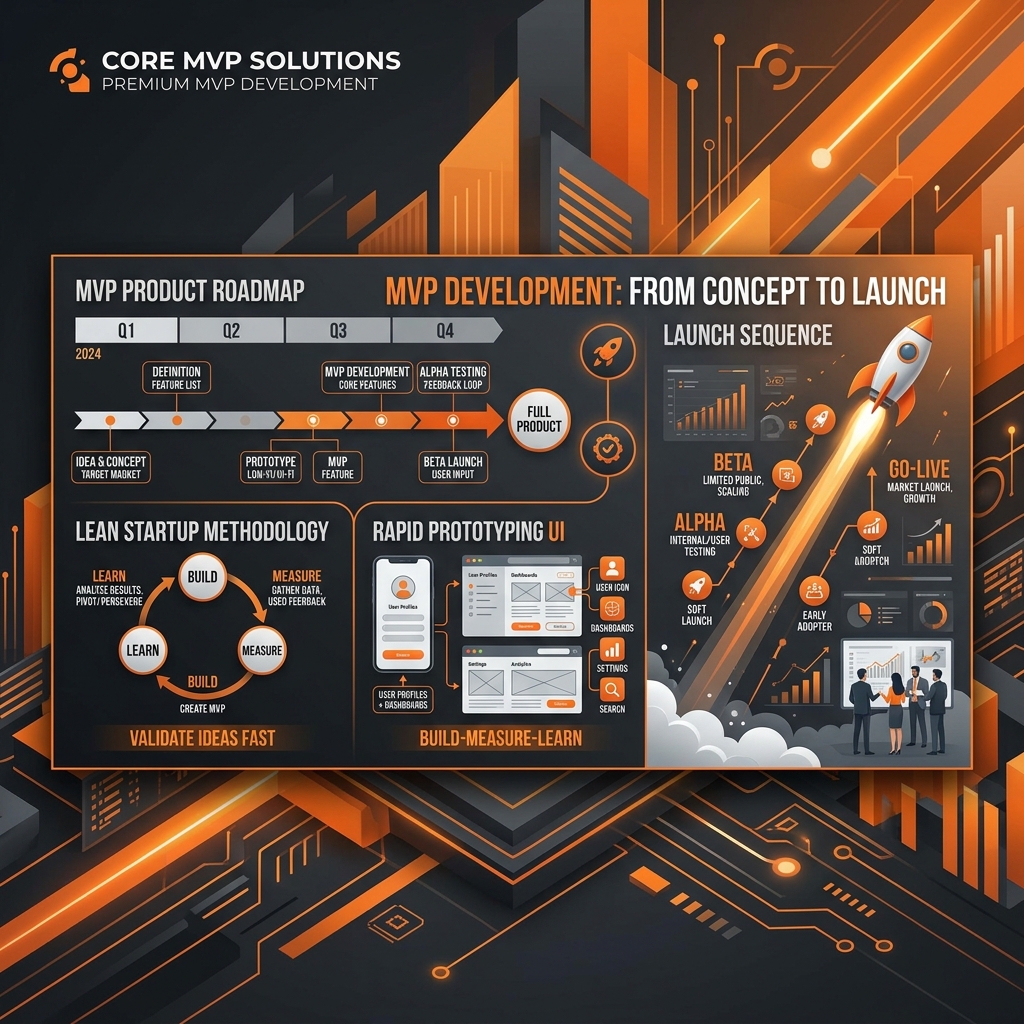
The Direct Answer: Reduce development costs by launching with a focused Minimum Viable Product (MVP), prioritizing features with the MoSCoW framework, using mature open-source frameworks (Laravel, React, Node.js), and creating interactive Figma prototypes before writing code.
Cost-Saving Rule: Changing a button or workflow in a Figma prototype takes 10 minutes; refactoring database schemas and backend code in production takes days. Validate user flows early!
7. Conclusion: Making an Informed Investment in Custom Web Software
The Direct Answer: Custom web application development is a strategic capital investment that pays compounding dividends through automated operations, increased customer conversion, and elimination of recurring SaaS subscription overhead.
At Scenic IT Solutions, we deliver enterprise-grade custom web software with transparent pricing and full code ownership. Check out our custom web application development services or request a detailed project estimate today.
Frequently Asked Questions
Why does custom web app development cost more than a WordPress website?
A standard website displays static content, whereas a custom web application contains complex business logic, user accounts, relational databases, real-time API integrations, and interactive dashboards engineered from scratch.
Can I build an MVP for under $20,000?
Yes, a focused Minimum Viable Product with a strictly scoped core feature set can be successfully engineered between $15,000 and $20,000 by leveraging established frameworks like Laravel and React.
How do agencies typically structure payment milestones?
Most reputable agencies structure payments across 4 to 5 deliverables-based milestones: Discovery & Wireframing (25%), Frontend & Architecture (25%), Backend & Integration (25%), and Final QA & Launch (25%).
What is the biggest cause of web application budget overruns?
Scope creep—adding new unbudgeted features midway through development without adjusting timelines—is responsible for over 80% of project budget overruns.
Do I own the source code after paying the development agency?
At Scenic IT Solutions, yes. You receive 100% intellectual property ownership of all source code, database schemas, and design assets upon milestone completion.
📚 Related Articles & Recommended Reading

Get an Itemized Estimate for Your Web Application
Have a web app idea? Contact Scenic IT Solutions for a free, transparent project scoping session and detailed architectural cost breakdown.
Request a Free Project Estimate