
Why Website Speed Matters for SEO and Sales in 2026: The Definitive Guide
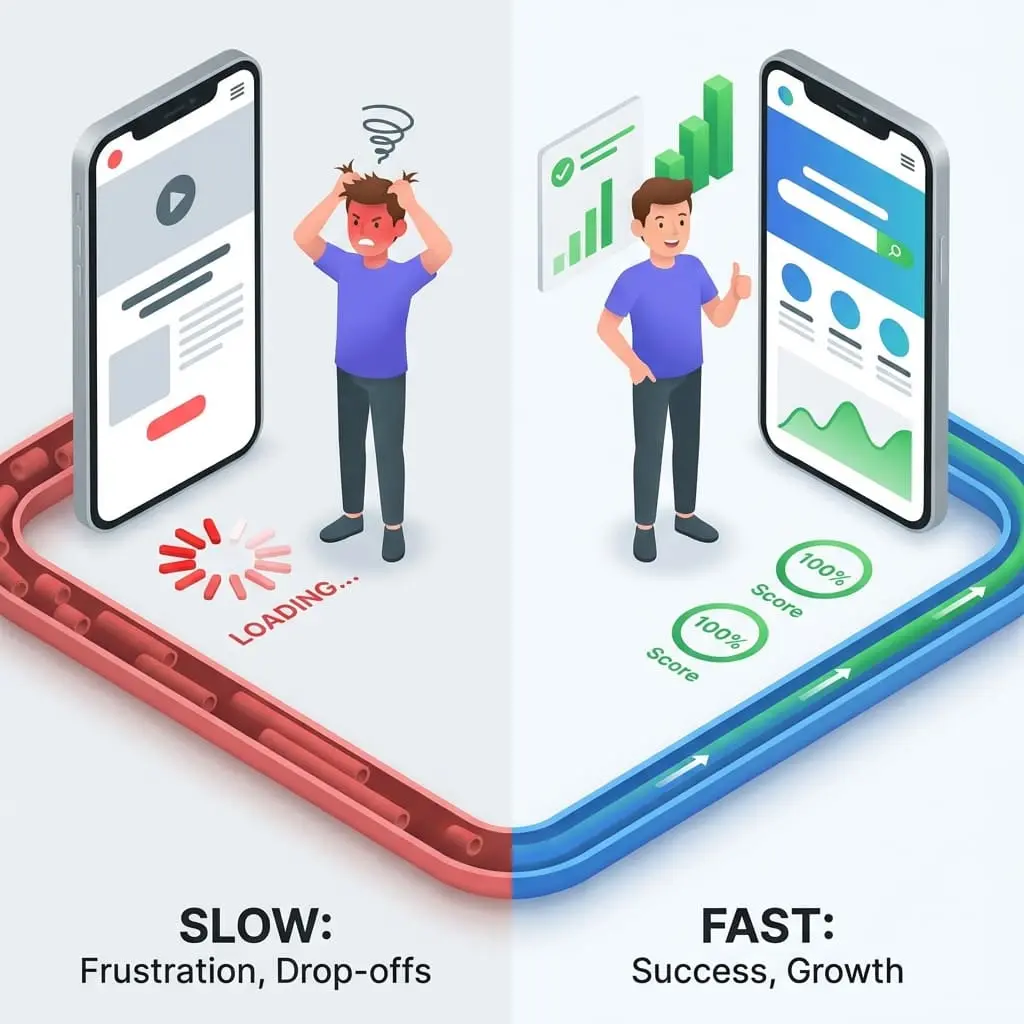
In the digital economy, seconds translate directly into dollars. You can invest thousands of dollars into beautiful graphic design, compelling copywriting, and aggressive paid ad campaigns, but if your website takes more than three seconds to load, over half your visitors will abandon the page before reading a single word.
Direct Answer: Website speed is critical for SEO and sales because Google directly utilizes Core Web Vitals as a ranking algorithm factor, while consumers demand instant responses—every single 1-second reduction in page load speed increases conversions by up to 7% and slashes bounce rates.
At Scenic IT Solutions, our web engineers obsess over sub-second performance. Here is the data-backed guide on why website speed matters in 2026 and how to optimize your technical foundations for peak rankings.
⚡ Key Takeaways
- Google officially uses Core Web Vitals (Largest Contentful Paint, Interaction to Next Paint, Cumulative Layout Shift) as a direct organic ranking signal.
- A 1-second delay in page load time reduces customer conversion rates by up to 7% and increases mobile bounce rates by 32%.
- Interaction to Next Paint (INP) replaced FID in 2024 to measure overall page responsiveness across the entire user session.
- Primary causes of sluggish performance include uncompressed media, render-blocking JavaScript bundles, and slow server Time to First Byte (TTFB).
- Achieving sub-second loading speed requires combining modern image formats (WebP/AVIF), edge CDN caching, and clean semantic HTML.
1. Why Website Speed Is a Decisive Google Ranking Factor in 2026
The Direct Answer: Google prioritizes fast-loading websites because speed directly mirrors real user satisfaction, crawls web pages more efficiently, and conserves search engine crawler resources.
Google's mobile-first indexing benchmarks websites based on real-world Chrome User Experience Report (CrUX) data. If two competing websites have similar content quality and domain authority, Google's algorithm consistently awards the higher ranking to the page that delivers a faster, cleaner user experience.
2. Understanding Core Web Vitals: LCP, INP & CLS Explained in Plain English
The Direct Answer: Google's Core Web Vitals evaluate three pillars of user experience: Largest Contentful Paint (loading speed), Interaction to Next Paint (interactivity responsiveness), and Cumulative Layout Shift (visual stability).
- Largest Contentful Paint (LCP): Measures when the main content (hero image or primary heading) is rendered on screen. Target: Under 2.5 seconds.
- Interaction to Next Paint (INP): Evaluates page responsiveness to user clicks, taps, and keyboard inputs across the entire session. Target: Under 200 milliseconds.
- Cumulative Layout Shift (CLS): Measures unexpected layout shifts that cause buttons or text to jump while loading. Target: Under 0.1.
3. The Direct Impact of Milliseconds on Conversion Rates and Bounce Rates
The Direct Answer: Research by Google, Amazon, and Walmart confirms that as page load times increase from 1 second to 3 seconds, the probability of a mobile bounce surges by 32%; at 5 seconds, bounce rates spike by 90%.
Amazon famously calculated that every 100 milliseconds of latency cost them 1% in total retail revenue. For an e-commerce store generating $100,000 monthly, a 1-second speed improvement can yield an additional $84,000 in annual revenue.
4. Top Technical Culprits That Cripple Page Speed
The Direct Answer: The most common causes of slow loading times are uncompressed high-resolution images, render-blocking JavaScript bundles, bloated third-party tracking tags, and sluggish server response times (TTFB).
Many websites load 5MB+ JPEG files when modern WebP or AVIF formats would deliver identical visual fidelity at under 200KB. Similarly, unminified JavaScript libraries prevent browsers from parsing HTML until scripts finish downloading.
5. Speed Benchmarks Across Industries and Revenue Impact (Table)
The Direct Answer: This industry benchmark table illustrates average page load speeds, bounce rates, and the commercial revenue impact of latency across major digital sectors.
| Industry | Average Mobile Load Time | Average Bounce Rate | Impact of 1-Second Speed Improvement |
|---|---|---|---|
| E-Commerce Retail | 2.8 Seconds | 45% – 55% | +7.2% Average Order Conversion |
| B2B Software & SaaS | 2.4 Seconds | 35% – 48% | +8.5% Lead Form Completions |
| Fintech & Banking | 2.1 Seconds | 30% – 40% | +5.4% Account Registrations |
| Content & Media Publishing | 3.6 Seconds | 58% – 70% | +12.0% Ad Impressions & Dwell Time |
6. Actionable Engineering Tactics to Achieve Sub-Second Load Times
The Direct Answer: Maximize speed by deploying responsive WebP/AVIF images, deferring non-critical JavaScript, implementing server-side caching (Redis, LiteSpeed), utilizing a global Content Delivery Network (Cloudflare), and adopting lightweight semantic CSS.
Avoid stacking dozens of third-party analytics and marketing scripts. Utilize Google Tag Manager with asynchronous script loading to prevent third-party tags from freezing user interactions.
7. Conclusion: Speed as Your Most Powerful Competitive Advantage
The Direct Answer: In 2026, website speed is no longer just a technical checkbox; it is the ultimate foundation of search engine optimization, customer delight, and commercial conversion.
At Scenic IT Solutions, our web development team builds blazing-fast custom web applications, e-commerce stores, and corporate websites optimized for Core Web Vitals from the first line of code. Check out our custom web application development services or request a technical speed audit today.
Frequently Asked Questions
What is considered a "good" website loading speed in 2026?
A good page speed benchmark is an initial server response time (TTFB) under 400ms, Largest Contentful Paint (LCP) under 2.0 seconds, and total page load time under 2.5 seconds on a mobile cellular connection.
How does Google measure website speed for ranking?
Google collects real-world performance metrics from millions of Chrome browser users through the Chrome User Experience Report (CrUX), factoring 28-day rolling Core Web Vitals into mobile ranking algorithms.
Does website speed affect Google Ads Quality Score?
Yes. Google Ads explicitly evaluates Landing Page Experience as part of your Quality Score. Faster loading landing pages earn higher Quality Scores, resulting in lower Cost-Per-Click (CPC) and higher ad positions.
What is the fastest way to improve a slow WordPress website?
Switch to a LiteSpeed server with LiteSpeed Cache (LSCache), convert images to WebP formats, eliminate bloated plugins, and connect a global CDN like Cloudflare.
Can custom coding solve speed problems that plugins cannot fix?
Yes. Pre-built templates often load megabytes of unused CSS and JavaScript. Custom-developed web applications load only the exact code needed for each page, guaranteeing near-instant load speeds.
📚 Related Articles & Recommended Reading


Accelerate Your Website Speed & Skyrocket Conversions
Are slow load times hurting your search rankings and bouncing valuable customers? Let Scenic IT Solutions perform a deep Core Web Vitals speed audit on your site.
Request a Free Speed Audit