
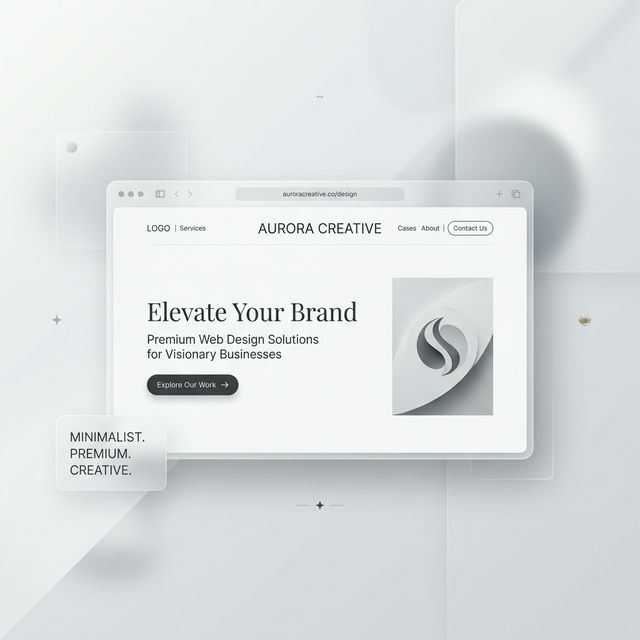
In a world of information overload, simplicity has become the ultimate luxury. As we navigate through 2026, minimalist web design remains the definitive gold standard for brands wanting to project authority, elegance, and efficiency. Far more than just "empty space," minimalism is a strategic approach that prioritizes content and user intent above all else.
The concept "Less is More" has evolved. Modern minimalism now incorporates subtle animations, organic shapes, and advanced typography to create immersive digital experiences. Companies that embrace these principles aren't just making "clean" websites — they're building high-performance assets that convert visitors into loyal customers.
Minimalism in 2026 is driven by purpose. Every element on the screen must justify its existence. If it doesn't serve the user's journey or reinforce the brand identity, it's removed.
Luxury brands and high-end services favor minimalism because it implies confidence. A cluttered website often feels desperate to prove itself; a minimalist one lets the product and word speak for themselves. This "digital breathing room" creates a sense of sophistication that resonated deeply with modern consumers in 2026.
The appreciation for minimal aesthetics is universal, but its application differs across world cultures. Here’s how the top design hubs are utilizing minimalism in 2026.
| Country | Style Variation | Why it's Popular |
|---|---|---|
| 1. Sweden 🇸🇪 | Hyper-Clean / Industrial | Deeply rooted in the Scandinavian "Lagom" philosophy of balance. |
| 2. Japan 🇯🇵 | Zen / Modern Minimalist | Combines traditional aesthetic (Ma) with futuristic tech interfaces. |
| 3. USA 🇺🇸 | Brutalist / Modern Typography | Focuses on bold brand statements and rapid conversion funnels. |
| 4. United Kingdom 🇬🇧 | Editorial / Grid-Based | Influenced by classic publishing layouts and luxury fashion houses. |
| 5. Denmark 🇩🇰 | Functional / Human-Centric | Prioritizes usability and accessibility above all else. |
| 6. Netherlands 🇳🇱 | Experimental / Geometric | A playground for innovative grid layouts and bold color blocks. |
| 7. Switzerland 🇨🇭 | Precision / Grid-Aligned | The birthplace of Swiss Style, focusing on objectivity and legibility. |
| 8. Canada 🇨🇦 | Nature-Inspired / Soft Minimal | Uses organic shapes and earthy muted tones for a welcoming feel. |
| 9. Australia 🇦🇺 | Lifestyle / Visual-Heavy | Uses large, high-quality photography as the primary minimal element. |
| 10. Germany 🇩🇪 | Structured / Rational | Focuses on technical clarity and unambiguous user paths. |
Transitioning to a minimalist design isn't just about deleting things. It's about refinement.
Beyond aesthetics, minimalism is an SEO powerhouse. In 2026, search engines like Google place immense weight on Core Web Vitals. Minimalist sites typically have fewer DOM elements, smaller CSS bundles, and fewer external scripts, leading to lightning-fast load times.
Fast sites aren't just loved by users; they're rewarded with higher rankings. By choosing a minimalist path, you're effectively optimizing your technical SEO from the ground up.
Yes. Minimalist designs lead to cleaner code and faster load times, which are key ranking factors that improve Core Web Vitals and overall search visibility.
While particularly effective for luxury brands and tech startups, minimalism is adaptable. It works for any business wanting to reduce clutter and focus user attention on key messages.

Does your website feel cluttered, outdated, or slow? In 2026, your digital presence is your strongest business card. At Scenic IT Solutions, we specialize in high-concept minimalist web design that perfectly balances a premium feel with peak performance.
Looking for a world-class design partner? Hire our UI/UX team or consult with us today to start your digital transformation.